
Germany-based marine battery specialist Lehmann Marine will supply energy storage systems for three new fully electric passenger ferries being built for Hamburg ferry operator HADAG.
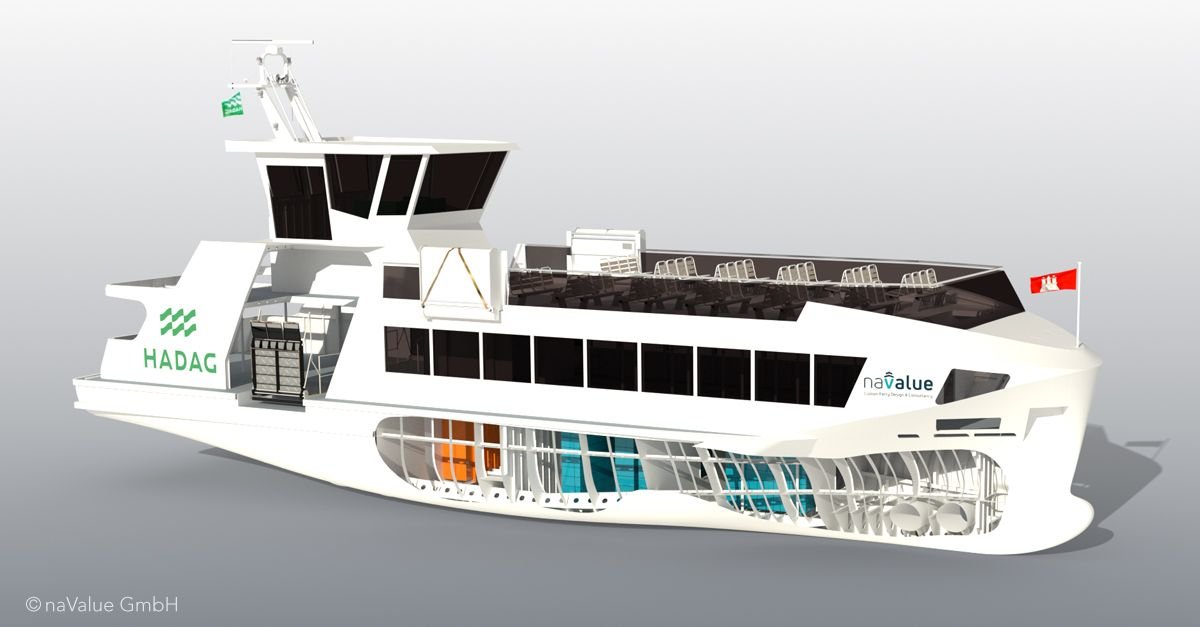
The vessels, under construction by German shipbuilder SET Schiffbau- und Entwicklungsgesellschaft Tangermünde, will become HADAG’s first purely electric ferries operating in the Port of Hamburg. The project marks the largest order in Lehmann Marine’s history and is positioned as a flagship initiative for the electrification of urban ferry transport.
Each ferry will be equipped with Lehmann Marine’s modular CUBE battery system, providing around 3.8 MWh of installed capacity per vessel. The company said the system is already in use across multiple vessels globally and is designed for high safety standards, long service life and simplified onboard maintenance through a modular architecture.
The Type 2030e ferries will measure about 30 m in length and 8 m in beam and will be able to carry up to 250 passengers. The battery installations are intended to enable fully emission-free and low-noise operations in port service. All three vessels are scheduled to enter service in 2028.
“As a company with roots in Hamburg competing in a strong global market, we are proud to contribute to the electrification of the HADAG fleet in the Port of Hamburg,” said Alexander Lehmann, Managing Director of Lehmann Marine. “This project demonstrates that high-performance battery systems are now a proven and practical solution for the emission-free operation of passenger vessels.”
Lars Köhler, Head of Sales at Lehmann Marine, added: “Fully electric propulsion systems are no longer just a technical alternative in ports – they are the decisive step toward eliminating emissions that affect residents and tourists alike. Our CUBE system enables quiet, clean, and climate-friendly port operations that protect the ecosystem and improve the environmental footprint of the Port of Hamburg.”