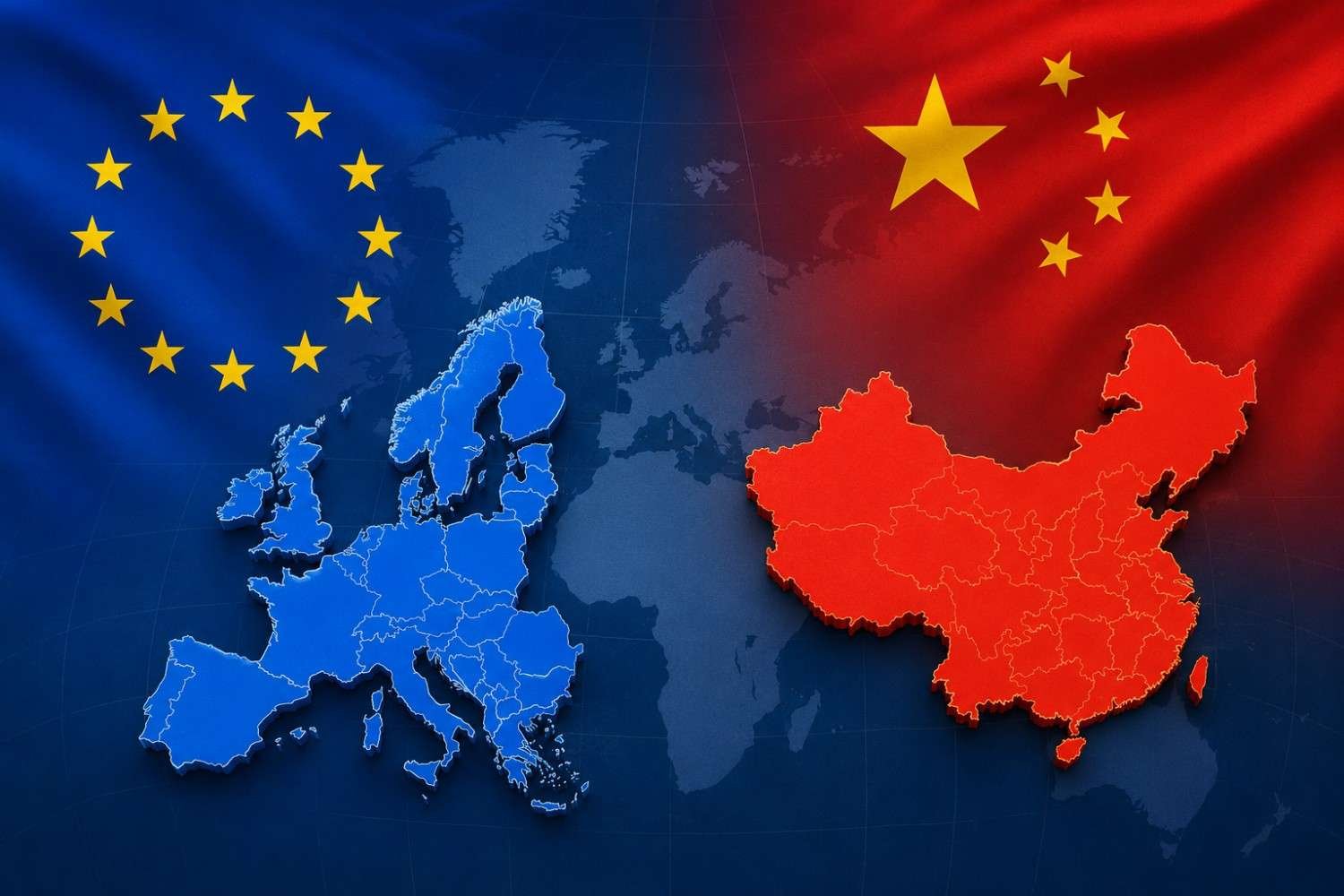
Europe could lose its lead in the emerging market for green shipping fuels unless it accelerates investment in e-fuel production, environmental group Transport & Environment (T&E) warned on Thursday.
Although Europe has a far larger pipeline of e-fuel projects than China, only six are currently operational, raising concerns that Chinese producers could dominate future supply.
According to T&E’s updated e-fuels tracker, Europe is home to 69 projects capable of supplying synthetic fuels to the maritime sector. If all are completed, they could produce up to 4.09 million tonnes of oil equivalent (Mtoe) of e-fuels annually by 2033, enough to meet around 14% of European shipping’s fuel demand.
The report said the project pipeline has expanded since the introduction of the FuelEU Maritime regulation in 2023, with Spain hosting the largest number of projects, followed by Denmark, Finland and France.
One of the most advanced developments is the Andalusian Green Hydrogen Valley in Spain, which reached a final investment decision (FID) in February. The project is expected to produce 474,000 tonnes of oil equivalent per year of e-ammonia and e-methanol.
While Europe has more projects in development, China is scaling production much faster, T&E said.
The analysis found that China has three operational e-fuel projects, compared with Europe’s six, but the Chinese facilities are producing around 10 times more than Europe’s operational plants. T&E warned this could leave Europe vulnerable to imports of Chinese-produced e-fuels if domestic production fails to keep pace.
“While Europe hesitates, China is actually getting e-fuels off the ground,” said Constance Dijkstra, maritime policy manager at T&E.
“If Europe wants to be a leading e-fuels producer, it needs to bridge the price gap between EU-made e-fuels and fossil fuels, and get shipping companies to start using those fuels instead of defaulting to imported LNG or biofuels.”
T&E said stronger financial support and additional regulatory measures would help more projects reach commercial operation and enable Europe to remain competitive in the emerging market for zero-emission marine fuels.