
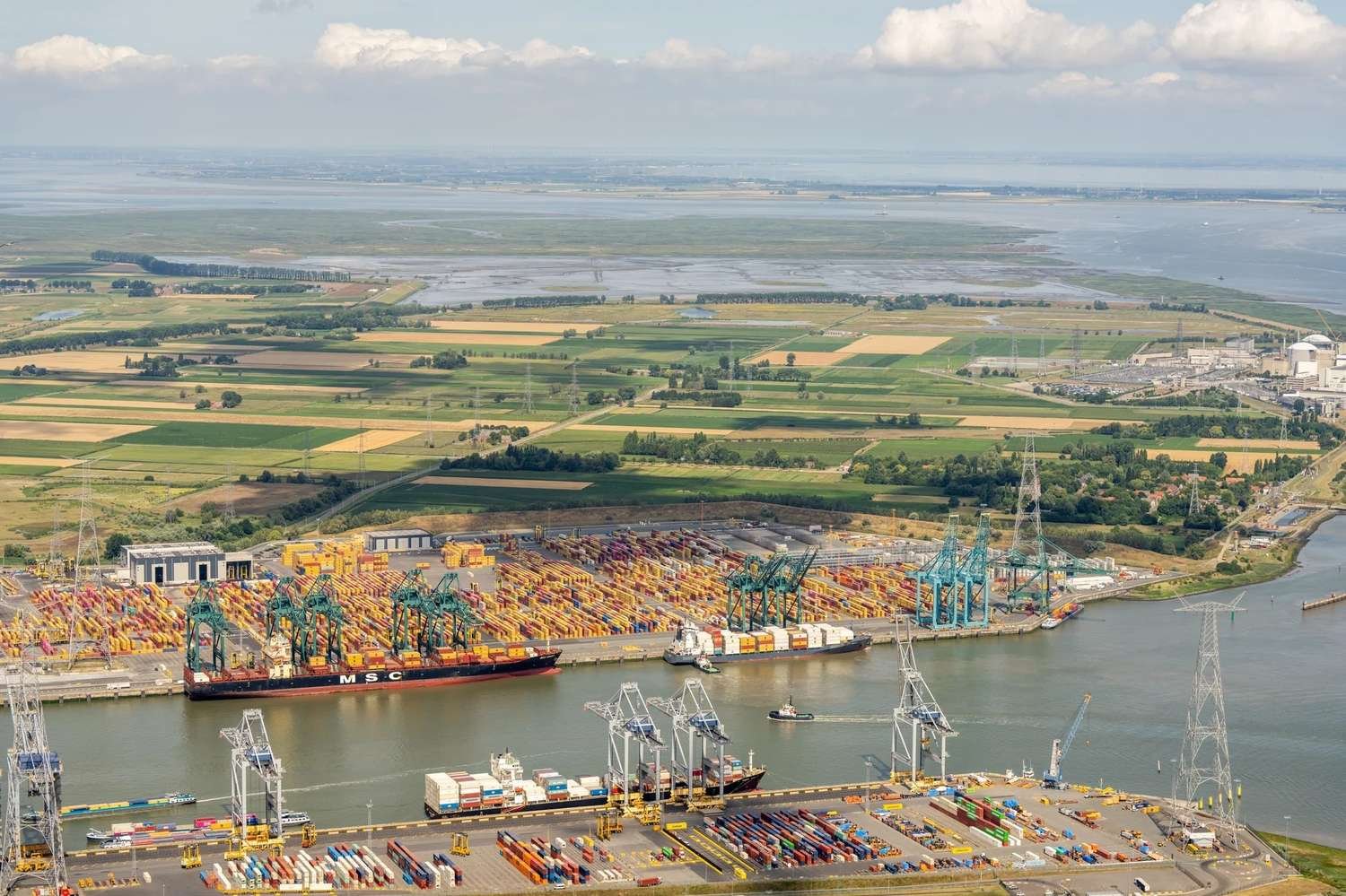
Port of Antwerp-Bruges, one of Europe’s largest integrated port hubs, said total maritime throughput fell by 4.1% in 2025 to 266.5 million tonnes amid geopolitical tensions, economic uncertainty and prolonged industrial action.
Container traffic remained resilient, rising 0.4% by tonnage and 0.7% in TEU, underlining the port’s role as a major European logistics hub but also reinforcing the need for additional capacity, the port said.
The US became the port’s largest trade partner, accounting for 31.3 million tonnes of throughput, supported by higher LNG imports. At the same time, container imports from China rose by 3.8%, widening the trade imbalance with the Far East.
Operations were disrupted by terminal congestion, changes in container shipping alliances and around 25 days of industrial action, which the port estimated reduced volumes by 2.4 million tonnes, or about 1% of annual throughput.
Liquid bulk declined sharply due to a 19% fall in oil products, while dry bulk dropped 12.1%.
RoRo traffic increased by 3%, supported by growth in trucks, heavy equipment and used cars.
In 2026, the port will prioritise safety, energy transition projects and major infrastructure developments, including additional container capacity in Antwerp and the New Zeebrugge Lock.
Jacques Vandermeiren, CEO of Port of Antwerp-Bruges, said: “2025 highlighted how strongly geopolitical and economic developments impact the operations of a global port like Port of Antwerp-Bruges. Tensions between the US, China and Europe, the war in Ukraine, congestion and industrial action had a clear impact.