
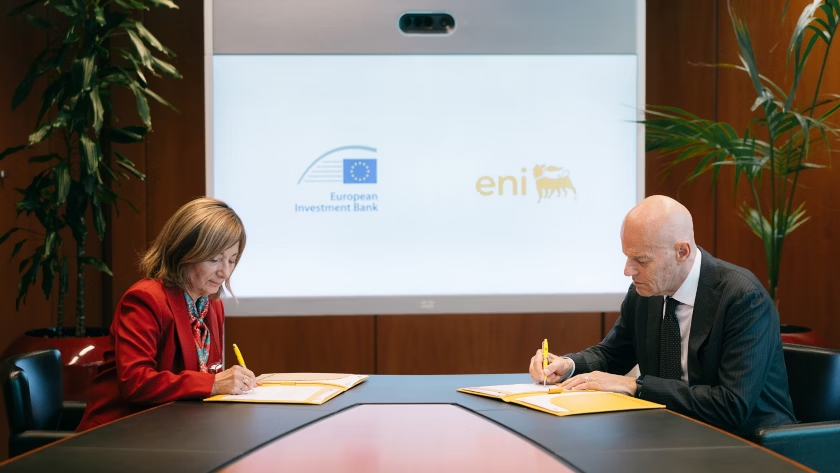
The European Investment Bank (EIB) and Eni have signed a €500 million, 15-year loan agreement to support the conversion of Eni’s Sannazzaro de’ Burgondi refinery in northern Italy into a biorefinery.
The project will focus on converting the refinery’s hydrocracker unit using Ecofining™ technology and building a pre-treatment plant for waste-based feedstocks such as used cooking oils and animal fats. These materials will be used by Enilive to produce hydrotreated vegetable oil (HVO) biofuels.
From 2028, the site is expected to produce around 550,000 tonnes per year of HVO diesel and sustainable aviation fuel (SAF), supporting decarbonisation efforts across road, maritime, rail, and aviation sectors.
The investment builds on a similar €500 million EIB-backed financing agreed in 2025 for the conversion of Eni’s Livorno refinery, as the company expands its biofuel production capacity. Eni aims to reach 5 million tonnes per year of biofuel output by 2030, including over 2 million tonnes of SAF.
The Sannazzaro conversion is expected to strengthen European energy security, expand regional biofuel supply, and support EU climate targets under REPowerEU and the Renewable Energy Directive.
EIB Vice-President Gelsomina Vigliotti said: “This financing represents strategic support for a project with high environmental and industrial value, contributing to the decarbonisation of the transport sector, particularly aviation. Through this initiative, the EIB aims to strengthen Europe’s capacity to produce advanced fuels and to promote the circular and sustainable use of resources.”
Eni CEO Claudio Descalzi added: “This new agreement with the EIB demonstrates the effectiveness and robustness of the strategy we pursue through our businesses related to the energy transition. To deliver a tangible transition towards energy solutions that have an increasingly low environmental impact, it is essential to create businesses that can grow and generate value.”
Demand for SAF is expected to accelerate from 2030 under EU blending mandates, reinforcing the long-term viability of the project.