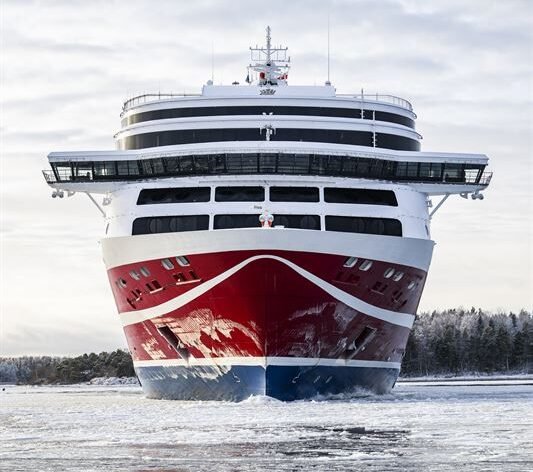
Viking Line said it reduced greenhouse gas emissions by more than 60,000 tonnes in 2025 after significantly expanding the use of biogas and accelerating the deployment of low- and zero-emission technologies across its fleet.
The company increased biogas consumption tenfold to around 6,000 tonnes during the year, enabling both passenger and cargo customers to choose carbon-neutral transport options for the first time.
Viking Line said the measures form part of a broader strategy to move towards fossil-free maritime transport, alongside operational efficiency improvements and new vessel concepts.
In June, the group unveiled its Helios concept, an electric-powered passenger-car ferry designed for the Helsinki–Tallinn route. If realised, the vessel would be the world’s largest of its kind and could support the establishment of a fully green shipping corridor across the Gulf of Finland in the early 2030s.
The company also reported that its increased focus on sustainability was accompanied by strong cargo performance in 2025, with freight volumes reaching a record 139,484 cargo units, up nearly 4% year on year.
“In this uncertain economic environment, we are very pleased with the strong results for cargo. That is based on good long-term collaboration with our partners. Our customers rely on us, and we develop new solutions for them – now most recently by offering fossil-free transport,” said freight director Harri Tamminen.
Viking Line said it will continue to expand the use of renewable fuels and advance electrification projects as it works to further cut emissions and align its operations with long-term climate targets for the maritime sector.