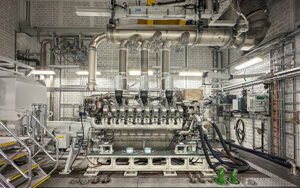

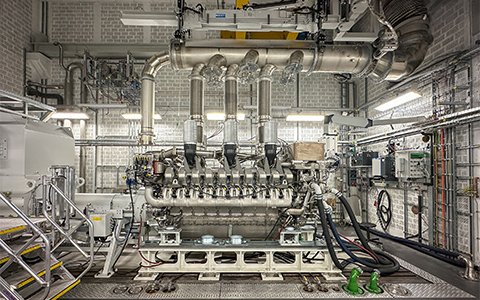
Rolls-Royce is now operating key mtu engine test benches in Germany using hydrogenated vegetable oil (HVO) instead of fossil diesel, cutting CO₂ emissions by around 3,200 tonnes by the end of 2025.
The transition covers facilities in Friedrichshafen, Augsburg and Ruhstorf, where testing of mtu Series 4000 engines — widely used in ships, trains, mining equipment and energy systems — is now carried out using renewable diesel derived from vegetable oils and waste materials.
The switch began in September 2024, with a phased rollout through 2025. At its Friedrichshafen site, CO₂ emissions from test benches fell by about 25% in 2025 compared to fossil diesel use. The company expects further reductions in 2026, as HVO will be used year-round.
“Decarbonising our operations is a clear corporate priority for us. Through our solutions, we are also supporting our customers’ sustainability goals,” said Nicholas Templin, Executive Vice President of Production, Logistics and Quality Management.
“The switch to HVO is an important step towards even more sustainable manufacturing of our products… using HVO makes the production of our products even more sustainable and has proven its worth in operational use.”
Beyond CO₂ savings, HVO delivers significant air quality benefits, with over 40% lower soot emissions and up to 8% fewer nitrogen oxides. Over its full lifecycle, emissions can be reduced by up to 90% compared to fossil diesel, depending on feedstock and production pathways.
A key advantage is that HVO can be used as a drop-in fuel, requiring no engine modifications, with Rolls-Royce Power Systems having approved its mtu engine range for fuels compliant with DIN EN 15940 since 2021.
In cost terms, the company said the average price premium of HVO over B7 diesel was about €0.10 per litre in 2025, highlighting a relatively modest gap as adoption scales.
The move forms part of Rolls-Royce’s broader push to lower the carbon intensity of its operations, while also enabling customers across marine and heavy industry segments to transition towards cleaner fuel solutions.