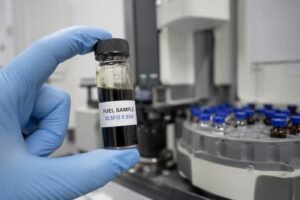

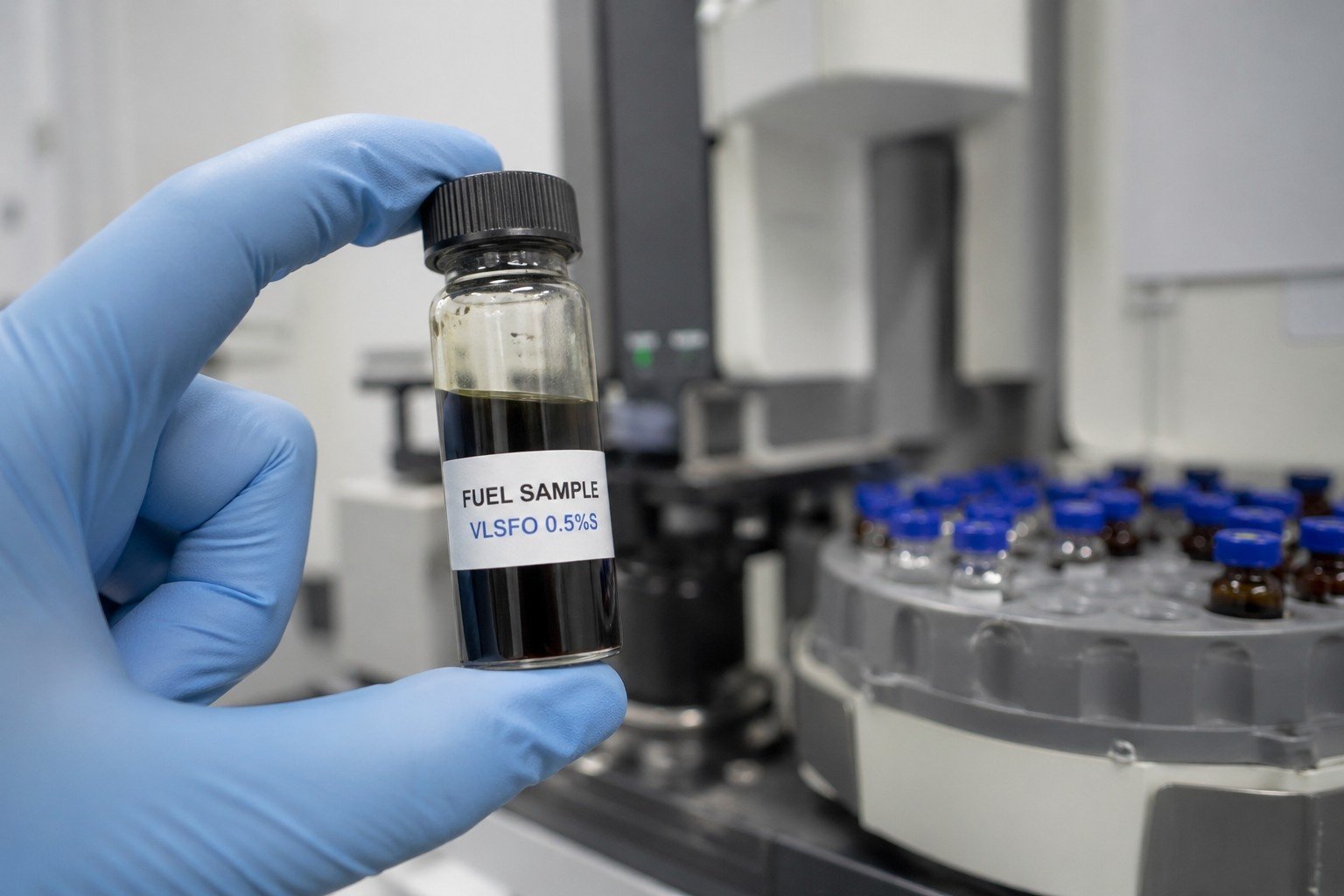
Skuld has warned shipowners after identifying marine fuels that meet ISO 8217 requirements but contain atypical chemical compounds detected through advanced testing.
The insurer said Gas Chromatography Mass Spectrometry (GCMS) analysis of bunkers supplied mainly in Singapore, Hong Kong, and Malaysia showed elevated levels of hydrocarbons, phenolic compounds, and alkylresorcinol derivatives. These profiles are consistent with the presence of shale oil components, which have also been reported by fuel testing laboratories.
According to Skuld, some samples contained dihydro-dicyclopentadiene and indene in concentrations of 5,000–14,000 ppm, alongside alkylresorcinol levels of 4,700–6,000 ppm. Similar compounds have previously been linked to Estonian shale oil and were observed in VLSFO fuels supplied in the ARA region in 2019.
While shale oil is not prohibited under ISO 8217, Skuld noted that high concentrations of such compounds are not typical of marine fuels and may pose operational risks. Potential issues include sludge formation, filter and purifier fouling, fuel injection problems, and reduced engine performance—although many vessels may not experience immediate difficulties.
The insurer emphasised that GCMS findings should be treated as an early warning, particularly where fuel-related machinery issues arise. In cases where fuels contain substances that jeopardise safety or machinery performance, they may fail to meet ISO 8217 Clause 5 requirements.
Skuld advised shipowners to strengthen due diligence when procuring bunkers, seek clarity on blend components, and consider advanced GCMS testing in addition to standard analysis. Enhanced onboard fuel management, monitoring, and record-keeping were also recommended to mitigate potential risks.