

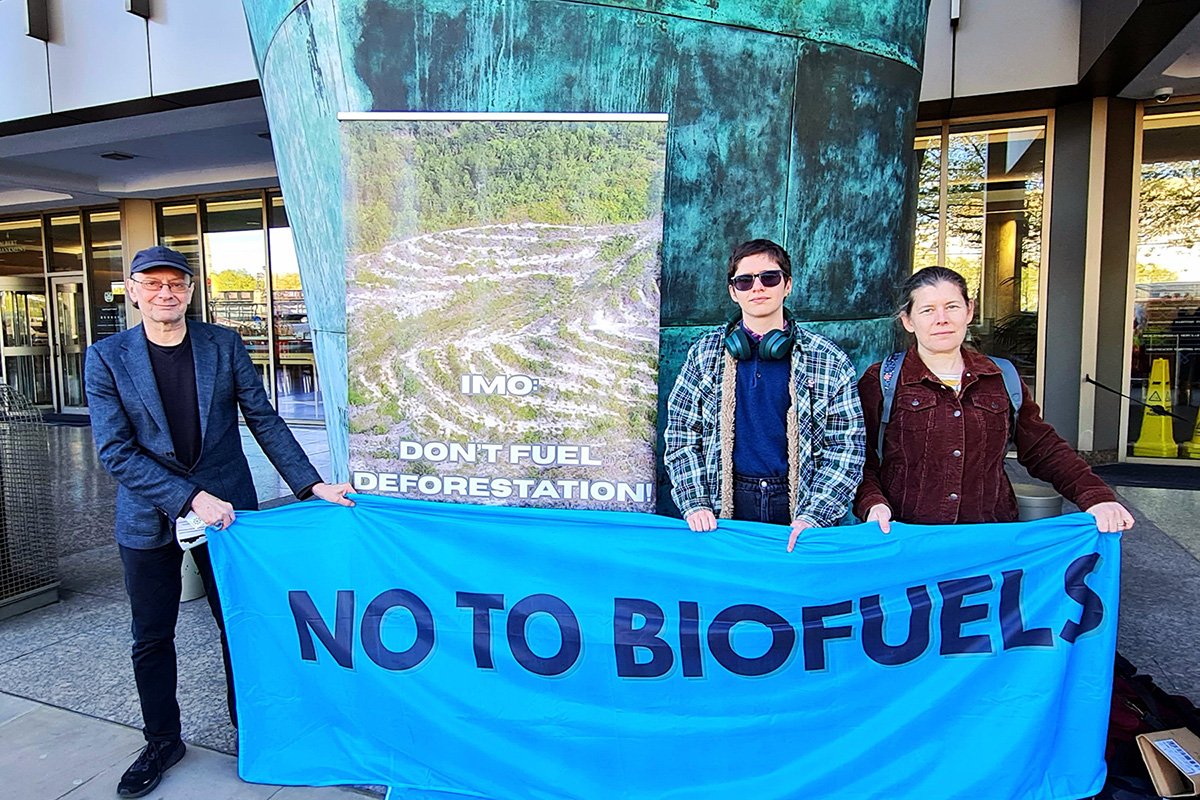
A coalition of environmental and conservation groups has urged the International Maritime Organization (IMO) to exclude biofuels from its shipping decarbonisation framework, as delegates meet for the latest round of climate talks in London.
The call comes during the 21st session of the Intersessional Working Group on Greenhouse Gases (ISWG-GHG-21), where member states are working towards measures to cut emissions from international shipping.
The groups, led by Biofuelwatch and Global Forest Coalition, argue that classifying biofuels as a green solution risks driving deforestation, land-use change and food insecurity in vulnerable regions.
“Biofuels are being promoted as a climate solution for shipping, but the reality on the ground tells a very different story,” said Xavier León of Grain.
They point to evidence from Indonesia and Latin America, where expansion of palm oil and soy production for biofuels has been linked to tropical deforestation, biodiversity loss and increased emissions from land-use change.
The coalition also warned of social impacts, including land grabbing and displacement of Indigenous communities, alongside pressure on global food systems as agricultural land is diverted to fuel production.
“As the demand for biofuels for shipping rises, the pressure on ecosystems and indigenous communities intensifies,” said Respati Bayu of Forest Watch Indonesia, highlighting overlaps between palm oil concessions and indigenous territories.
The intervention comes as the IMO faces growing pressure to finalise its net zero framework for a sector responsible for around 3% of global greenhouse gas emissions.
While supporting efforts to decarbonise shipping, the groups argue that biofuels risk becoming an “accounting fiction” rather than delivering real emissions reductions.
“We have watched our forests disappear to fuel cars in Europe,” said Eko Yunanda of WALHI Riau. “We cannot now stand by while the same logic is extended to fuel the ships crossing our oceans.”
The NGOs are instead calling on governments to prioritise genuinely zero-emission solutions, including wind propulsion and operational measures such as speed reduction, rather than relying on biofuels within the sector’s decarbonisation pathway.


